
Why San Francisco Homes Sell So Far Over Asking
If you've been following San Francisco real estate this year, you've probably seen some eye-catching headlines: homes selling hundreds of thousands—or even millions—of dollars over asking.
1 in 10 single-family homes in San Francisco has sold for at least $1 million over its list price
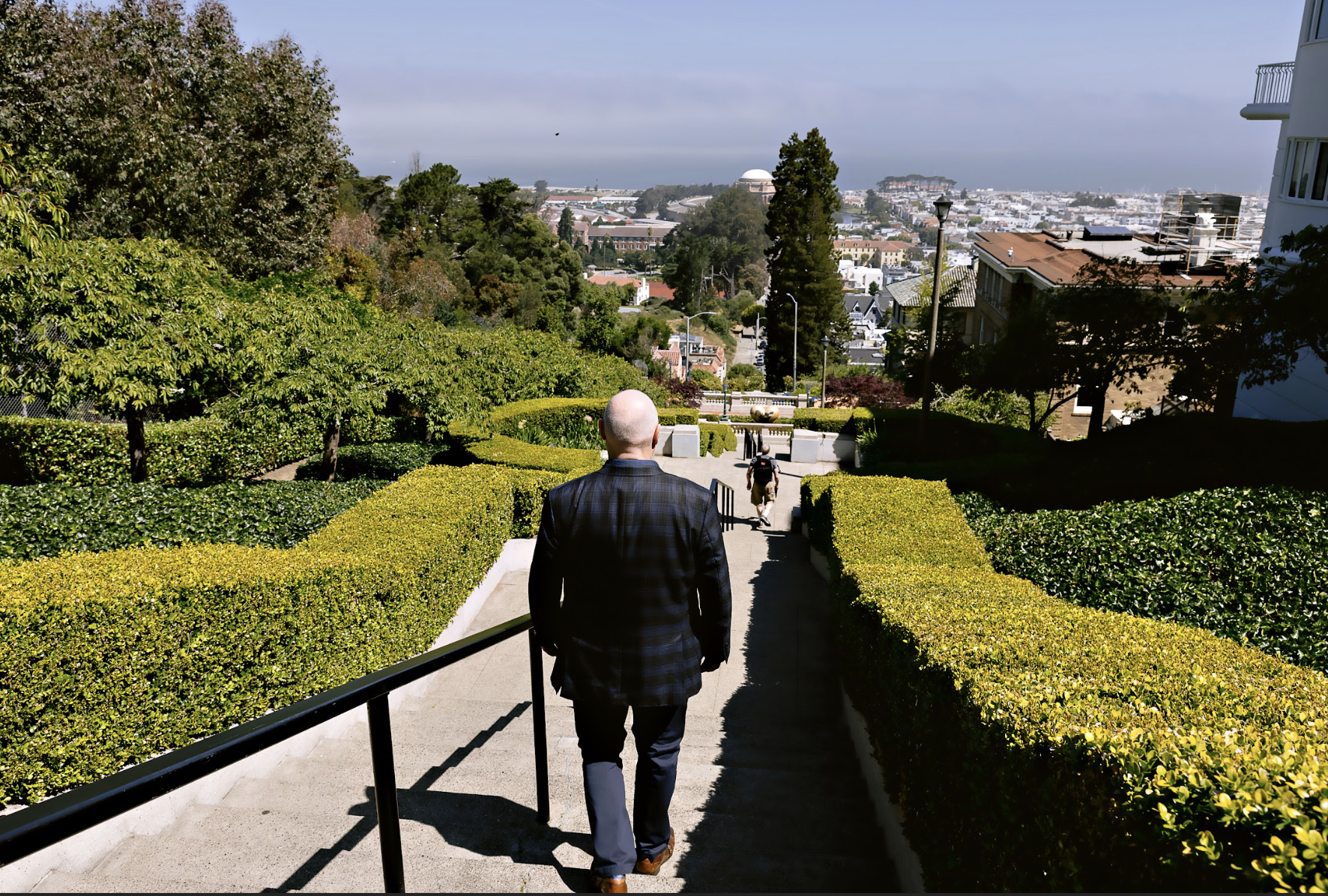
Lyon Street Stairs
So far in 2026, 1 in 10 single-family homes in San Francisco has sold for at least $1 million over its list price. That's 141 homes through August 18, compared with just 20 during all of 2025.
It's an extraordinary change. But it doesn't necessarily mean San Francisco home values suddenly jumped by $1 million.
It tells us something much more important about the way homes are being priced and sold.
List Price, Market Value, and Sale Price Are Not the Same Thing
This is one of the most important concepts for both buyers and sellers to understand in San Francisco.
List price is the price used to bring a property to market. In many cases, it's deliberately designed to attract a broad pool of buyers and encourage competition.
Market value is what recent comparable sales, the property's condition, location, and current market activity suggest the home is actually worth.
Sale price is what the winning buyer ultimately agrees to pay.
Sometimes those three numbers are fairly close.
Right now, they often aren't.
Through August 18th, 89% of San Francisco single-family homes sold over asking. Among homes that sold over list price, the average sale price was approximately 23% above asking price.
That makes judging a home—or an offer—based solely on the list price particularly dangerous.
Why Would a Seller List Below Market Value?
Because in the right circumstances, competition can be a very powerful selling tool.
A strategically lower list price can put a home in front of more buyers, increase showing activity, generate more disclosure requests, and create a sense of urgency.
When several qualified buyers decide they want the same property, the seller isn't negotiating against one buyer. The buyers are effectively competing against one another.
The goal isn't simply to sell "over asking."
The goal is to create the conditions most likely to produce the strongest possible sale price and terms.
That's an important distinction.
But Underpricing Isn't Always the Right Strategy
This is where experience and local market knowledge matter. There is no single pricing formula that works for every San Francisco property.
A well-located single-family home in a neighborhood with a large, active buyer pool may be an excellent candidate for an aggressive pricing strategy.
A luxury property, condo, tenant-occupied building, or highly unusual home may have a much smaller pool of potential buyers. Pricing dramatically below expected value doesn't automatically create competition if there aren't enough buyers for that particular property.
In those cases, pricing closer to market value may make considerably more sense.
Even within San Francisco, the numbers vary significantly by district and property type.
Time on Market Matters Too
One of the more interesting patterns in this year's sales is the relationship between time on market and the eventual sale-to-list ratio.
Homes selling within 30 days have closed at a median of roughly 130% of their list price. As time on market increases, that ratio declines.
That doesn't mean selling quickly automatically creates a higher price. Often, both results are symptoms of the same thing: a property that was positioned correctly for the market from the beginning.
A home that comes out at the right price, looks its best, and immediately captures buyer attention has an opportunity to create competition while interest is at its highest.
Once a property has been sitting on the market for weeks or months, the psychology changes.
What This Means for Buyers
Buyers need to be particularly careful about using list price to determine whether a home is within their budget.
A home listed for $1.2 million isn't necessarily a $1.2 million home.
Before deciding what to offer—or even whether to pursue the property—look at the recent comparable sales. Understand the neighborhood's current sale-to-list patterns. Find out how much interest the property is receiving.
The better question isn't:
"How much over asking should I offer?"
It's:
"What is this home actually worth in today's market, and what will it likely take to buy it?"
Those are very different questions.
What This Means for Sellers
For sellers, the opposite mistake can be equally costly: assuming that the highest list price is automatically the best pricing strategy. It isn't.
The objective isn't to win the listing-price contest. It's to maximize the final result.
Sometimes that means pricing aggressively and allowing the market to compete.
Sometimes it means pricing much closer to expected value and waiting for the right buyer.
The strategy should reflect the home, the neighborhood, the buyer pool, competing inventory and the market at that particular moment.
Heading Into Fall
Inventory typically begins to return after San Francisco's quieter summer period, which should give buyers more choices.
But more inventory doesn't necessarily mean less competition for the homes buyers want most.
Mortgage rates remain another wildcard. If rates move meaningfully lower, additional buyers could enter a market that has already shown considerable strength this year.
For both buyers and sellers, that makes understanding the market beneath the list price more important than ever.
After more than 20 years selling San Francisco real estate, one thing I've learned is that pricing a home isn't simply about choosing a number.
It's about choosing a strategy.
Market data reflects San Francisco single-family home sales through August 18, 2026, based on San Francisco MLS data. Information is deemed reliable but not guaranteed and is subject to change.