Neighborhood schools, 7% mortgage rates, a big local ballot, and the tightest inventory we've seen in years. Here's what it all means for San Francisco homeowners and buyers.
Gary Snow SF Real Estate Advisor · October 30, 2026 · 6 min read
October is bringing some real changes to San Francisco, and several of them could shape our housing market for years to come.
The school board has taken a major step toward replacing the elementary school lottery with neighborhood-based assignments. Mortgage rates have climbed again, though you'd hardly know it from the competition for certain homes. A consequential November election is days away. And our inventory remains remarkably tight.
Let's take them one at a time.
01 · Schools
Neighborhood Schools Are Coming Back. Could Your Home Become More Valuable?
On October 13, the San Francisco Board of Education voted 5–2 to move toward replacing the city's longstanding elementary school lottery with a neighborhood-based assignment system.
Under the proposed approach, families would be guaranteed access to a designated neighborhood school based on their home address, while keeping some opportunities to apply to specialized programs elsewhere. The new system is expected to begin with the 2028–29 school year. Final details and attendance boundaries are still to be determined.
For anyone who has raised children in San Francisco, this is a big deal. For years, buying near an excellent public elementary school was no guarantee your kids would actually attend it. Families sometimes crossed the city every morning while a desirable school sat just blocks from their front door.
San Francisco's lottery largely separated school choice from real estate decisions. That may be about to change.
In cities where enrollment is tied to address, access to sought-after public schools has long influenced home prices. We could eventually see increased demand for homes within certain elementary boundaries, especially from young families. The policy also raises real questions about equity, school resources, and whether housing prices could become another barrier to educational opportunity.
It's something I'll be following closely as the boundaries take shape.
02 · Rates
Mortgage Rates and the K-Shaped Economy: A Tale of Two Housing Markets
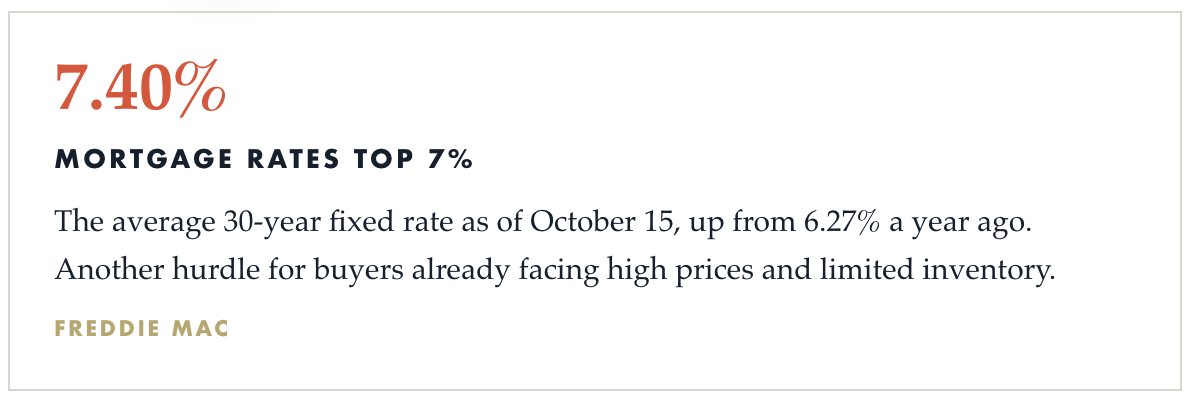
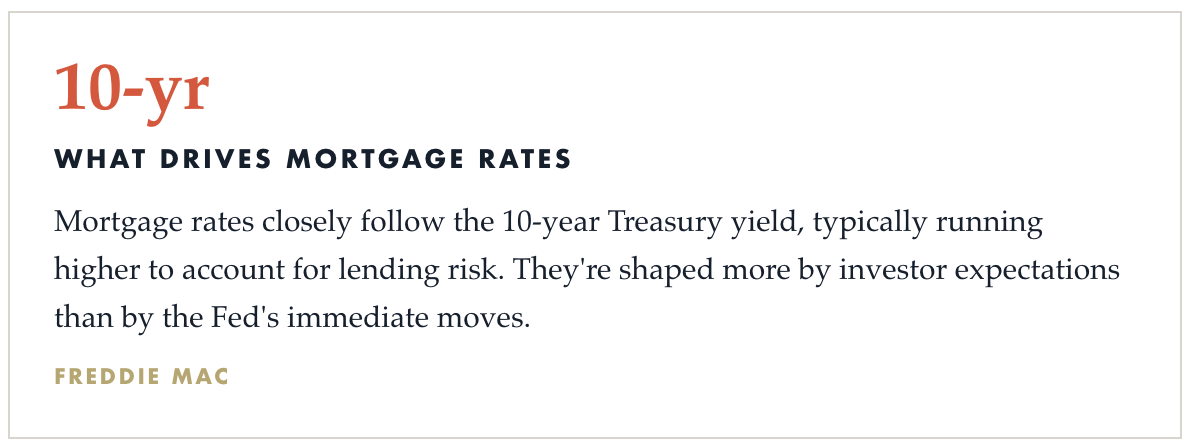
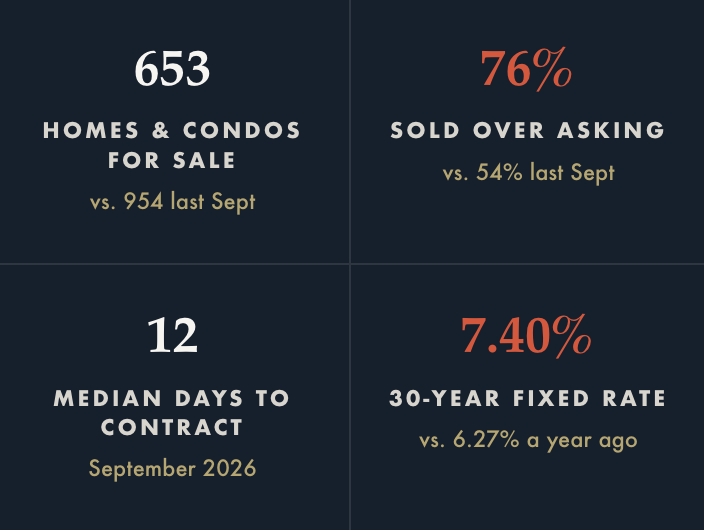
As of October 15, the average 30-year fixed mortgage rate reached 7.40%, up from 6.27% a year ago. The Federal Reserve influences short-term borrowing costs, but mortgage rates track the 10-year Treasury yield more closely, which reflects expectations for inflation, growth, and future rates.
Across much of the country, higher borrowing costs are slowing sales, growing inventory, and putting pressure on prices. Yet San Francisco continues to see multiple offers and substantial overbidding on desirable properties.
Part of the explanation is our increasingly K-shaped economy. Wealthier households benefit from rising investment values while others struggle with inflation, debt, and affordability. San Francisco's concentration of tech wealth, stock compensation, and cash buyers means some purchasers are far less sensitive to rates, while buyers who depend on financing face a much harder road.
The result is two markets in one city: one where buyers are pulling back, and another where competition remains fierce.
03 · Election
Election Season: What Homeowners Should Pay Attention To
With the November 3 election approaching, national races dominate the headlines, but local ballot measures often have a far more immediate impact on the places we call home. Four deserve a closer look.
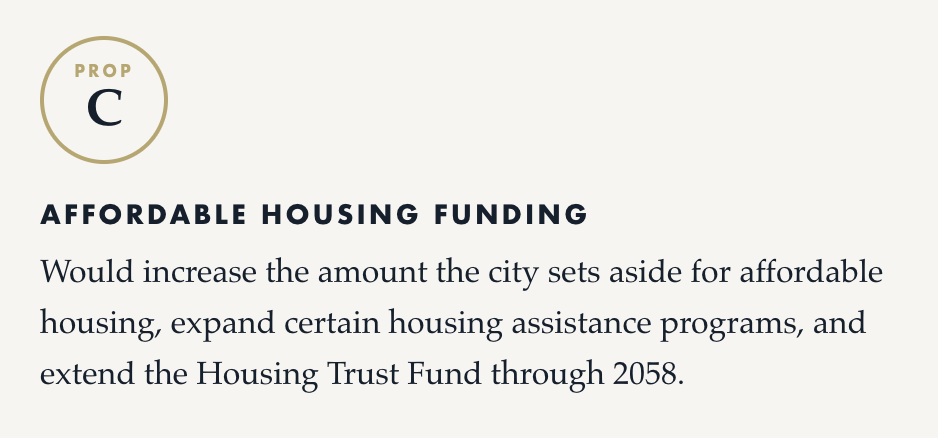
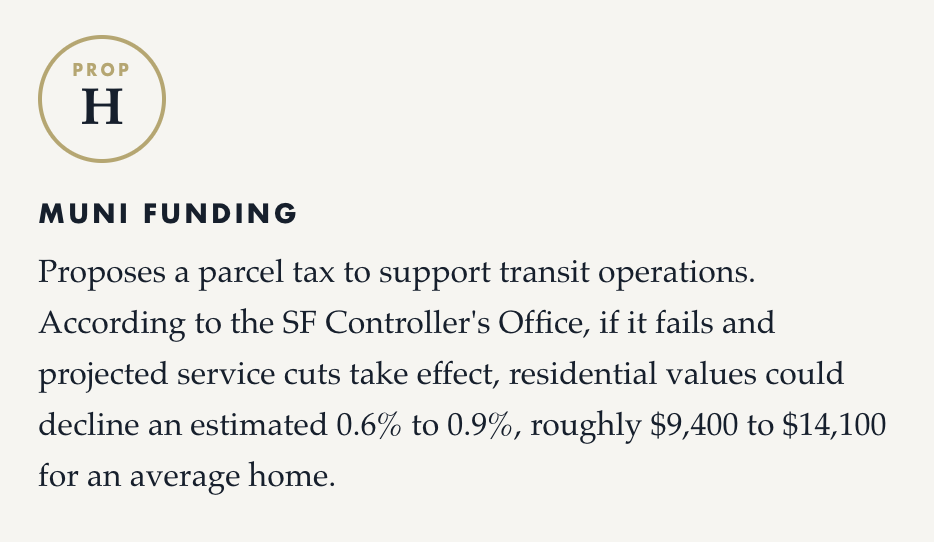
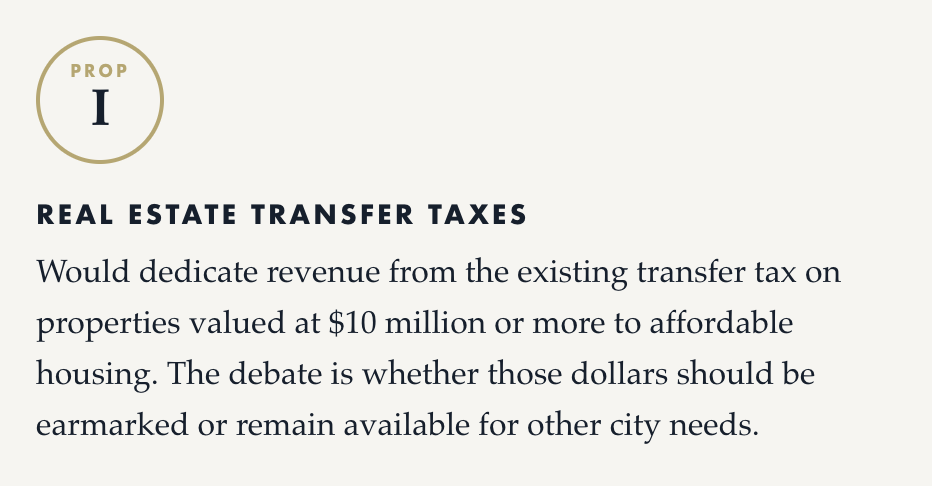
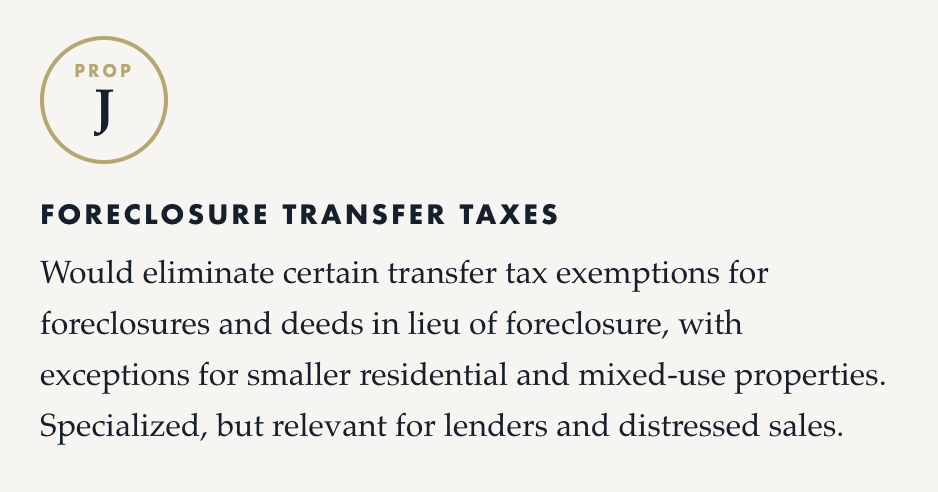
Beyond these measures, the outcome could shape broader decisions about housing development, taxation, infrastructure, and city services.
04 · Inventory
San Francisco Inventory: Where Have All the Homes Gone?
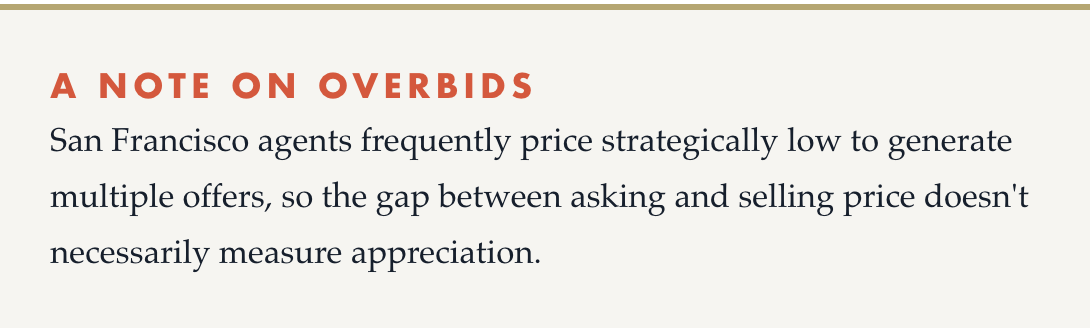
While inventory is growing in much of the country, San Francisco is moving the other way. We ended September with just 653 single-family homes and condos for sale, compared with 954 in September 2025, about 32% fewer. September usually brings a wave of new listings after the summer slowdown. Supply stayed exceptionally tight anyway.
The competition is striking. About 76% of homes and condos sold above asking in September, up from 54% a year earlier. The median property went into contract in 12 days, and single-family homes sold for a median of nearly 29% over asking.
Condos are coming back
After several soft years following the pandemic, condos are showing meaningful signs of recovery. September's median condo price reached $1.325 million, and available inventory fell substantially from last year. Not every condo is performing equally: location, building quality, HOA costs, outdoor space, and condition still make a tremendous difference.
What's driving the shortage?
The mortgage rate lock-in effect is a big part of it. Many owners refinanced or bought when rates were extraordinarily low and are understandably reluctant to give that up. Others simply aren't motivated to move. And unlike markets with abundant new construction, San Francisco has limited ways to expand supply quickly.
For sellers, this creates real opportunity, especially when a home is thoughtfully prepared, marketed, and priced. For buyers, it means the national headlines don't necessarily describe what's happening here. San Francisco has always been a market of microclimates, and understanding your specific neighborhood matters more than ever.
05 · The National Data